The Psychology of a Hacker or How to Detect the Early Warning Signs
01 December 2025 • 7 min read
When a cyber-attack unfolds, most people imagine a flurry of alerts, dashboards lighting up red, and defenders rushing to contain the breach. But long before any system is compromised, an attack begins somewhere else entirely: inside the mind of the hacker.
Every intrusion starts with a thought, a spark of curiosity, a moment of emotional imbalance, or a desire to test boundaries. Understanding this psychological landscape is one of the most underestimated defensive advantages. Technology logs what happened. Psychology reveals what will happen.
To protect systems, we must first understand the humans trying to break them.
Curiosity: The First Step in the Hacker’s Journey
Before intent turns malicious, the hacker almost always approaches a system out of curiosity. It is rarely personal at the beginning. A hacker stumbles on a domain, notices a forgotten endpoint, or wonders whether a login page still uses an outdated library. The motivation is exploratory rather than destructive.
This stage is the most dangerous because it is easy to overlook. The reconnaissance is slow, gentle, and often disguised as harmless traffic. Someone might repeatedly test how an endpoint responds to malformed input or spend days collecting small details about a system’s infrastructure. They are not breaking anything yet. They are simply learning.
Their behaviour resembles someone inspecting a building, not to enter it, but to understand how it was built. And yet, it is in these subtle observations that the attack truly begins.
The Thrill of Control
At some point, curiosity shifts into something sharper: the psychological high of taking control. For a hacker, gaining access is not merely a technical achievement, it is emotional gratification. It is power. A door that should have been locked suddenly opens. A protected file reveals its contents. A forbidden console quietly returns valid responses.
This feeling creates an internal reward loop. The hacker becomes persistent. If a defence stops them, they adjust. If an endpoint moves, they search for it again. The behaviour evolves from testing to hunting. You can recognise this escalation in the digital echo they leave behind: renewed attempts at the same entry point, a growing sophistication in the payloads, or activity that resurfaces after every patch.
The attacker is no longer exploring. They are pursuing.
Dissociation: The Ethical Blind Spot
A surprising number of hackers do not consider themselves criminals. Instead, they detach their actions from the consequences. They convince themselves that they are only challenging a system, not harming people. Some even see their intrusions as “educational,” or imagine the company should be grateful for the free test.
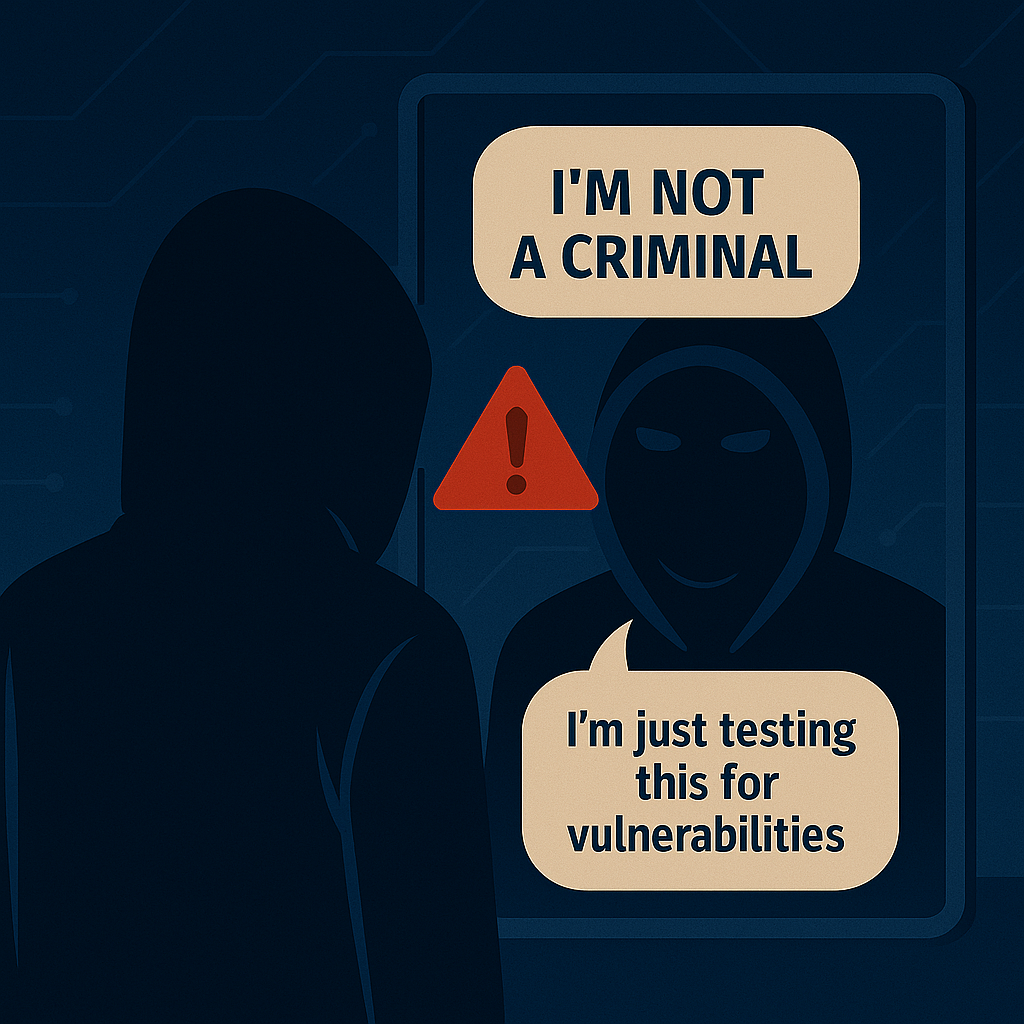
This moral distancing is particularly visible in insider threats. When employees feel undervalued, frustrated, or restricted by internal controls, they may start treating security measures as obstacles to bypass rather than protections to respect. The moment an employee says, “I just disabled the check to get my work done faster,” a psychological shift has already occurred.
It is in these quiet rationalisations that early danger resides.
The Many Faces of Motivation
Hackers are not a single archetype. Their motivations shape both their behaviour and the warning signs they leave behind.
Some are financially driven. Their reconnaissance focuses on databases, authentication flows, or anything that might lead to monetary gain. They behave like burglars mapping a neighbourhood, studying security cameras, and observing routines.
Others are ideologically motivated. They appear suddenly when a geopolitical event unfolds or when the organisation makes headlines. Their attacks often target reputation before infrastructure. They seek visibility and symbolic disruption more than financial benefit.
Then there are those motivated by revenge or personal conflict. These attackers are emotionally charged, and their persistence can be alarming. They know the systems, the people, the internal vocabulary. Their activity often emerges at unusual hours, from home VPNs, remote logins, or terminal commands unrelated to their duties.
Finally, a large group simply seeks the thrill of overcoming a challenge. These attackers behave like climbers attempting a difficult mountain. Their scans shift in small increments, their payloads improve over time, and their mistakes reveal their learning curve. They are not aiming at a specific asset. They are targeting the satisfaction of victory.
The Subtle Dance Before the Strike
A well-executed cyber-attack rarely begins with noise. It begins with patience. Skilled hackers behave like slow-moving shadows, adjusting their actions just enough to remain unnoticed. They observe how the defenders respond. They trigger small alerts to see whether anyone reacts. They stop their activity abruptly to create a false sense of calm.
If you pay attention, you can feel the tension in the logs, a rhythm of probing, waiting, adjusting, and returning. Viewed individually, these traces seem harmless. Collectively, they tell a story: someone is learning your habits.
In many breaches, the organisation’s greatest mistake was not failing to stop the exploit. It was failing to notice the behaviour that preceded it.
What a Hacker’s Tools Reveal About Them
Technology carries psychological fingerprints. The tools an attacker chooses say more about them than the code they run.
Inexperienced attackers rely on public scripts, unmodified scanners, and one-size-fits-all exploit kits. Their approaches are clumsy, loud, and riddled with mistakes.
Professionals and state-level actors leave the opposite signature. Their tools are customised, their payloads obfuscated, their scans carefully spaced to avoid detection. Everything about them feels intentional.
Insiders are different still. Their access looks legitimate. Their activity blends with normal operations. The warning signs come not from the tools, but from subtle deviations, accessing the wrong files, logging in at odd hours, or attempting to cover their tracks manually.
Even the way a hacker names a variable or comments a script can reveal experience level, cultural background, or emotional state. Every keystroke tells a story.
The Quiet Signals That Matter Most
Before an attack materialises, there are always signs. Not loud ones, quiet ones. A sudden increase in failed MFA attempts. A user accessing files they never touched before. A forgotten endpoint suddenly receiving repeated requests. A spike of activity at 3 AM. An employee expressing frustration with security protocols. An unknown actor who spent two weeks studying the system and then suddenly stops.
That silence is often the moment before the storm.
Defenders who understand the psychology behind these patterns can detect an attack not when it happens, but before it happens.
Bringing Psychology Into Modern Cyber Defence
This perspective aligns naturally with leading security frameworks. NIST emphasises the importance of understanding risk from human as well as technical angles. MITRE ATT&CK maps attacker behaviour in ways that match psychological progression, from reconnaissance to execution to evasion.
What these frameworks highlight, and what psychology confirms, is simple: the earlier you understand the attacker’s mindset, the earlier you can intervene.
Cybersecurity is no longer just a matter of firewalls, SIEMs, and scanners. It is a behavioural science. A form of digital anthropology. A study of human motives expressed through packets, tokens, and API calls.
To Outthink the Hacker, Understand the Human
Technology will always evolve. Attack surfaces will expand. AI will accelerate both attacks and defences. But one thing remains constant: behind every intrusion is a human mind with predictable impulses and patterns.
If you understand those patterns, you can spot the attack long before it begins.
You can detect the hesitation, the curiosity, the thrill, the frustration, the shift in behaviour.
And once you recognise those early psychological signals, the breach becomes preventable.
In cybersecurity, the greatest advantage is not knowing how the attack happened.
It is understanding why it began.